
Surf trips in Nias
Fast reef barrels, empty lineups, consistent S-SW swell May through October.
Nias is a remote Indonesian island where every break sits on exposed reef and demands speed and commitment.
The west coast faces S to SW swells year-round, but May through October is when consistent ground swell turns marginal waves into world-class barrels. Southern breaks like Lagundri Bay fire in the 6ft plus range, while northern peaks like Asu peel clean in lighter swells.
You'll need intermediate to advanced skills. Most breaks see minimal crowds outside peak season.
Base yourself in Lagundri Bay village for logistics and reef access. The island has basic roads, motorcycle taxis, and limited but functional surf infrastructure.
One honest note: the 2005 earthquake uplifted every reef here, so wave shape shifted permanently. Study current conditions before committing to a trip.
Where should I surf in Nias?
5 spots and 1 camps in Nias.
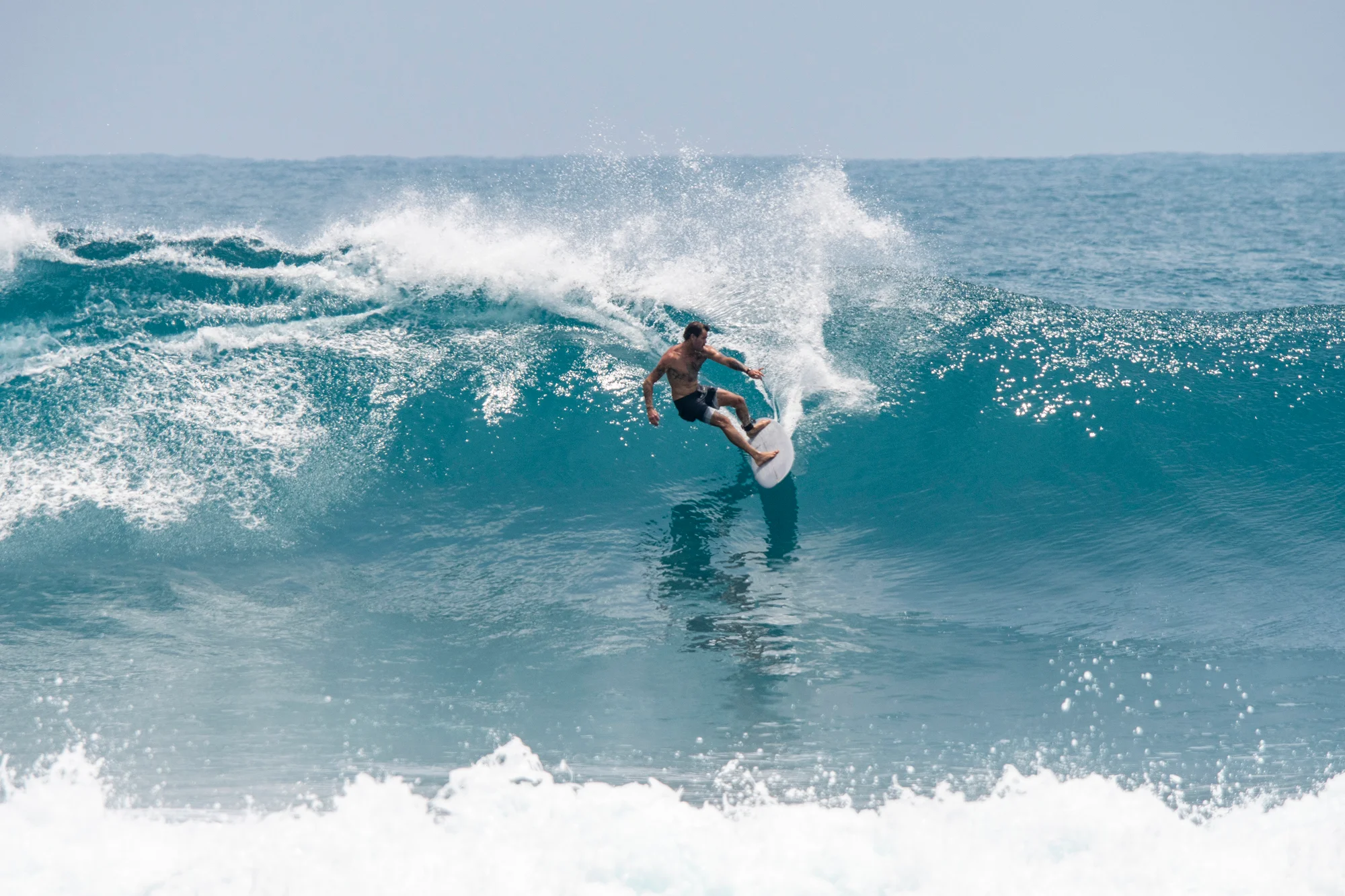
When Nias fires
Nias, the long version
Logistics
Nias sits off the west coast of North Sumatra. Fly into Medan, then take a domestic flight or ferry to Nias Island. Most surfers fly Medan to Gunungsitoli airport (roughly 1.5 hours).
From there, hire a car with driver or negotiate a fixed scooter rate to Lagundri Bay village at the southern end. That drive takes 2-3 hours on rough roads. Once in Lagundri, motorbikes are your main transport between breaks.
The island has one main sealed road. Petrol is available in villages. Accommodation clusters in Lagundri Bay: guesthouses, losmen, and a handful of proper resorts with wifi and hot water.
Internet is patchy. No dedicated surf shops. Bring spare fins, plugs, and repair resin.
Banks and ATMs exist in Gunungsitoli but not in Lagundri. Withdraw cash in Medan or Gunungsitoli before heading south. Minimum trip: 7 days to justify the travel time.
Lineup etiquette
Nias breaks are still relatively uncrowded, but locals and land-camp crews earn priority at Lagundri Bay and Asu. Respect the locals who've been paddling here for decades. Don't drop in on anyone, ever.
Lagundri's reputation attracts intermediate surfers who shouldn't be there. If you're unsure whether you can make the barrel, sit deep and watch. At more remote breaks like Afulu and Hiliduha, you'll likely have the wave to yourself or share with a few serious regulars.
If you see someone styling the barrel, give them space. Crowds swell May through August. October is still consistent but quieter.
Aggressive locals are rare, but disrespect will burn you. Straightforward advice: be humble, paddle hard, and stay out of the way if you're outgunned.
What to pack
Bring a 5'10 - 6'4 thruster for daily use. Pack a second board in case you snap something on reef. A 6'2 - 6'6 semi-gun helps on the bigger swells at Asu.
Boardies or a 2mm springsuit year-round. Water sits 27-30°C. Reef booties are essential.
Bring multiple pairs because coral cuts fast. Heavy-duty zinc oxide sunscreen and reef-safe lotion. A small first-aid kit: antiseptic, antibiotic ointment, bandages, and pain relief.
Sea urchins live on these reefs, so carry tweezers and vinegar. Bring a thick wetsuit repair kit and several plugs. Sunglasses and a legit hat.
Sarongs for sitting in the village. Indonesian rupiah in cash. Phone charger with a power bank because electricity can drop in Lagundri.
When to go
May through October is the prime window. May and June see cleaner mornings and lighter winds. The swell builds consistency by June and stays solid through September.
July and August are busiest but conditions are nearly guaranteed. September and October offer lighter crowds and solid swell, though late October can trend lighter. April is borderline.
November through April remains risky. Swells are smaller and more erratic, and the island can catch tail-end rain from the Indo-Australian monsoon. I'd book May, June, or September for the best mix of conditions and solitude.
If you're chasing pure consistency and don't mind company, July and August deliver firing days back-to-back.
Where to eat post-surf
Lagundri Bay village has a few warung clusters. A local spot near the main beach serves solid nasi goreng and ikan bakar (grilled fish) for pocket change. One guesthouse kitchen prepares fresh fruit smoothies and eggs every morning.
Ask your host for directions. If you're staying at a resort, most offer on-site meals. The food is simple, fresh, and rice-heavy.
Fruit vendors sell bananas and mangoes in the market. For proper coffee and toast, track down Samosi, a warung owned by a surfer who understands travel rhythms. Water from the tap is risky.
Stick to bottled. Markets have ice-cold beer and weak coffee. Cooking facilities are rare, so eat out or ask your guesthouse to prepare meals if you have dietary needs.
Hidden alternatives
When Lagundri Bay crowds thicken mid-peak season, drive north to Afulu on the northwest coast. It's smaller, wairier, and genuinely empty most days. The left barrel is fast and technical but rewards surfers who prioritize speed over style.
On the south-central coast, Hiliduha delivers sucky tubes when the swell lines up, but the bay geometry can be fickle. Bring patience and a guide who knows the paddle. Asu island breaks are accessed by boat and demand a crew or land-camp arrangement.
The reward is dreamy left-hander walls with barrels that peel in isolation. These spots lack the infrastructure and swell consistency of Lagundri, but that's precisely why they stay empty.
The questions we get asked most
No. Every break is a reef hollow that penalizes hesitation. You need solid intermediate skills, comfort in barrels, and fast takeoffs. Lagundri Bay's entry level is intermediate-advanced. Start elsewhere in Indonesia if you're learning.
July and August see the most surfers, especially at Lagundri Bay. Even then, Nias is quieter than Bali or Mentawais. If you hate sharing peaks, visit May, June, September, or October instead.
Water is 27-30°C year-round. Boardies work, but a 2mm springsuit protects you from sun, jellyfish, and coral scrapes. Reef booties are mandatory.